Computing for AI Research
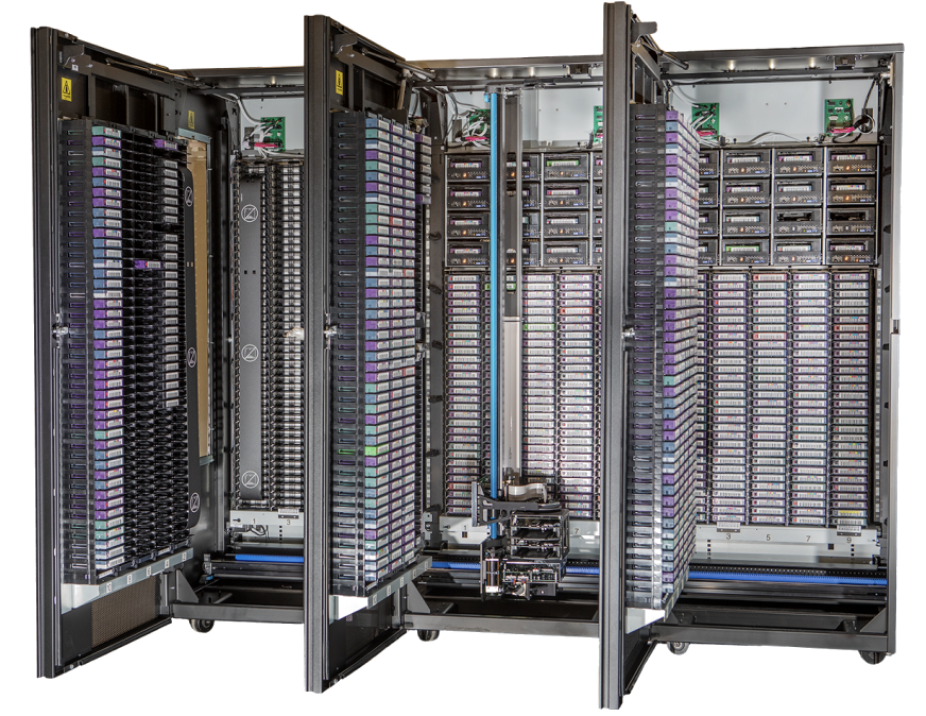
NSF NCAR Quasar Tape Library contains tape cartridges, hard drives, disk cache, and mover servers for long term archival storage.
NSF NCAR provides national-scale computing infrastructure designed to support AI/ML training, inference, and large-scale Earth system science workflows. These systems enable researchers to work with complex models and massive datasets, without needing to manage specialized hardware or infrastructure themselves.
Our computing ecosystem includes:
- Derecho — NSF NCAR’s flagship supercomputer powering large-scale AI training, ensemble weather prediction, and extreme-event analysis at national-scale compute capacity
- Casper — a flexible platform for interactive analysis and AI workflows
- CIRRUS — NSF NCAR’s cloud-native research infrastructure
Together, these systems support the full AI lifecycle, from data discovery and preprocessing to distributed training, inference, and deployment, tightly integrated with shared storage and AI-ready data services.
In addition, we provide extensive support for community users.
Derecho
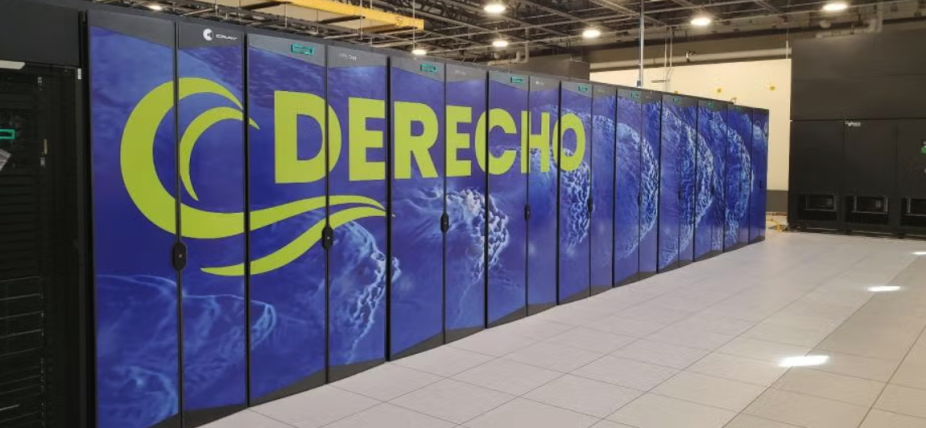
Derecho, NSF NCAR’s flagship supercomputer, delivers approximately 20 petaflops of peak performance and includes:
- 2,488 high-performance CPU compute nodes
- 328 NVIDIA A100 GPUs for large-scale AI training and hybrid modeling
Its GPU partition is purpose-built for the massively parallel tensor and matrix operations required for modern deep neural networks, supporting:
- Distributed AI model training
- Ensemble weather prediction
- Physics-based simulations and hybrid AI workflows
- Extreme-event analysis and real-time forecasting
High-bandwidth interconnects enable efficient multi-node distributed training, which make training a large neural network on the NCAR supercomputer fast and seamless.
Derecho is also co-located with GDEX and NSF NCAR's petabyte-scale data archives on shared high-performance storage, enabling researchers to stream AI-ready datasets directly into training pipelines efficiently and without costly data transfers.
Casper
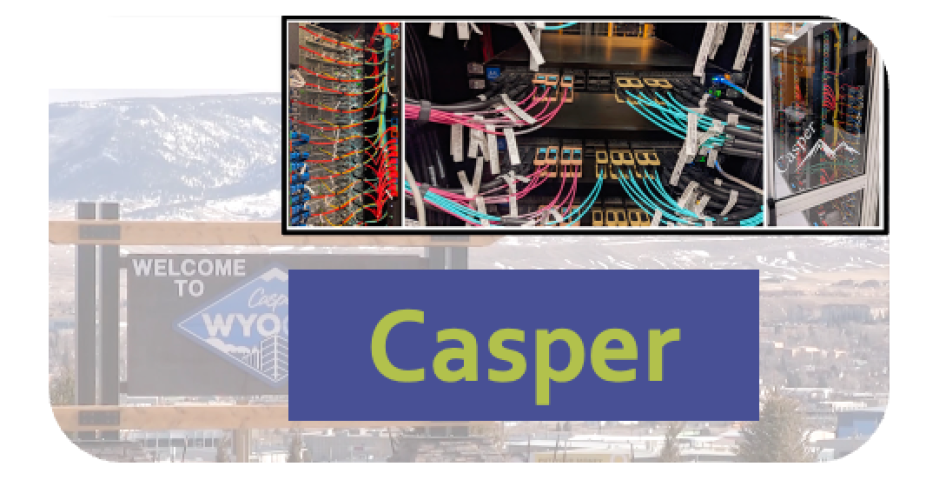
Casper complements Derecho by supporting interactive, flexible AI workflows.
Casper is NSF NCAR’s heterogeneous analysis platform, designed to help researchers move efficiently from model development to production-scale execution on shared storage. Its flexible infrastructure, including support for multiple GPU types and large-memory nodes, enables AI workflows, rapid prototyping, benchmarking, and inference within an integrated environment.
Specialized nodes support:
- Interactive data exploration
- Large-memory workloads
- GPU-accelerated AI inference
- Visualization and post-processing
Because Casper and Derecho share the GLADE storage system, researchers can move fluidly through the full AI lifecycle: discovering datasets in GDEX, exploring and preprocessing on Casper, launching distributed training on Derecho, and returning to Casper for analysis or inference, without transferring data between systems.
Cirrus
CIRRUS (Cloud Infrastructure for Remote Research, Universities, and Scientists) is NSF NCAR's on-premises cloud platform, built on Kubernetes-based, developer-friendly technology. CIRRUS extends the NWSC's capabilities beyond traditional batch computing by enabling researchers and developers to deploy applications, host interactive services, and run modern cloud-native workflows — all with high-speed connectivity to NSF NCAR's shared storage and HPC systems.
CIRRUS extends traditional HPC capabilities by enabling researchers and developers to:
- Deploy applications and AI services
- Host custom dashboards and interactive web visualization tools
- Run modern cloud-native workflows
- Implement CI/CD pipelines through GitHub Actions
CIRRUS powers GDEX, NSF NCAR’s Geoscience Data Exchange, and hosts a growing ecosystem of research services and data-driven applications.
Co-located with Derecho, Casper, and GDEX on shared high-performance storage, CIRRUS allows researchers to build AI-enabled services that operate directly on NSF NCAR’s data archives — without moving data between systems.
This integration makes CIRRUS a natural platform for next-generation AI research services, including natural-language data discovery tools and real-time model inference endpoints.
CIRRUS is open to all NSF NCAR departments and collaborating universities. To use these computing resources, NSF NCAR provides a range of allocation opportunities to support U.S.-based Earth system science researchers and students.
Access Eligibility
NSF NCAR provides a range of allocation opportunities to support U.S.-based Earth system science researchers and students — both with and without NSF awards.
In general:
- U.S.-based researchers with an NSF award in Earth system science or a related field are eligible for university allocations.
- Small allocations and dedicated opportunities are available for graduate students, postdocs, and early-career faculty without NSF awards.
- Classroom and workshop allocations support educational activities, including running and teaching AI models for Earth system science (no NSF award required).
Find out more about allocations: