Estimating Aerosol Size and Concentration from Multi-Wavelength Lidar Data for Aerosol Size and Concentration
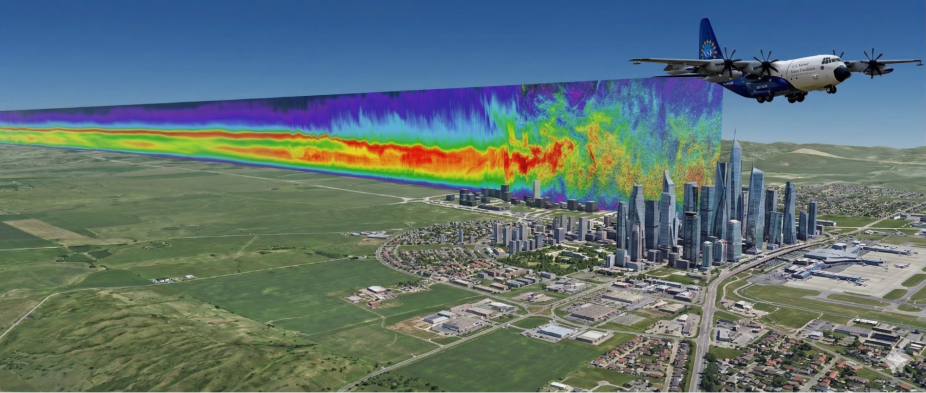
Tiny particles in the air, called aerosols, affect weather, cloud formation, and air quality. Accurately measuring their size and concentration helps scientists better understand how they influence weather, Earth systems, and human health.
Light Detection and Ranging (Lidar) instruments use laser light to detect atmospheric particles at multiple wavelengths. While these lidar observations provide valuable information, translating the signals into actual particle size and concentration is difficult. Many different combinations of particles can produce similar lidar signals, creating confusion about multiple possibilities. Traditional methods often rely on strong assumptions to narrow the range of possibilities, potentially missing other realistic atmospheric conditions.
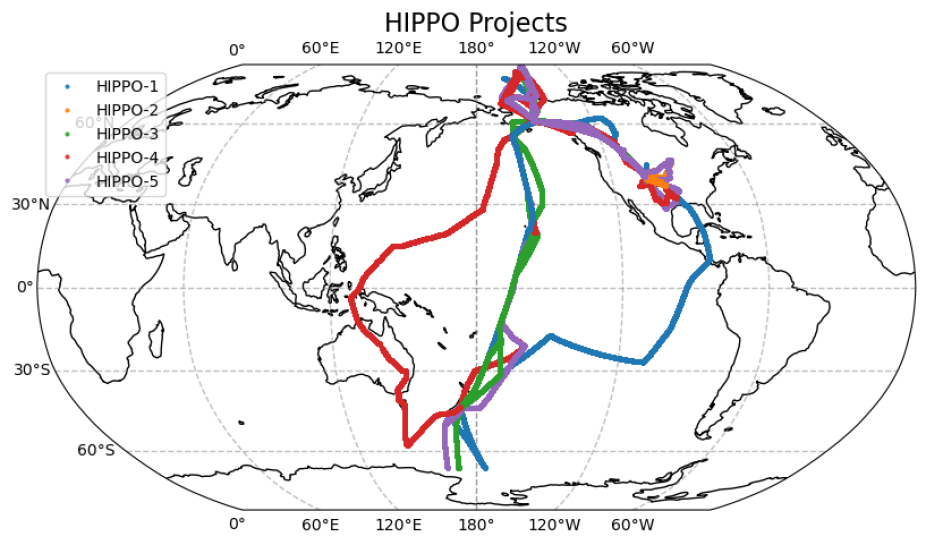
Figure: field campaign data used to train and validate the Neural Network
This project introduces a novel machine learning framework that directly addresses this differentiation challenge by linking multi-wavelength lidar data to a repository of historical aerosol size and concentration measurements collected directly from the atmosphere. Our approach develops a model that, for any given set of lidar observations, outputs a joint probability density function (PDF) for effective particle radius and concentration. This PDF is a powerful tool because it is built from prior data-driven observations, encapsulating the range of microphysical properties previously observed in nature and constrained by the lidar's optical measurements. As a result, instead of producing a single answer, the model generates a probability distribution that shows the range of particle sizes and concentrations that could realistically match the measurements. This allows scientists to better understand the uncertainty in the data and identify the most plausible atmospheric conditions.

Figure: Example of lidar observations during the SOCRATES field campaign. Aerosol scientists would like to know the characteristics of aerosols throughout these curtains, but they also need to understand the associated uncertainties.
By capturing this robust range of physics-informed possible solutions, the resulting framework offers a way to process and assess multi-wavelength lidar data that encapsulates the full uncertainty of the observations. Furthermore, it also helps researchers by providing a direct analysis of the fundamental limitations of what multi-wavelength lidar inversions can measure, offering new insight into both the capabilities and the uncertainties of aerosol observations.
For more information or partnership opportunities, please contact Matthew Hayman.