Our Science Using AI
NSF NCAR is reimagining how Earth system science is conducted through the transformative use of AI. We integrate AI and ML with observations, data assimilation, and physics-based models to uncover hidden patterns, accelerate discovery, and expand the limits of predictability. From hybrid AI–physics modeling and AI-driven parameterizations to emulators, explainable AI frameworks, and advanced uncertainty quantification, our work advances fundamental understanding and enables more skillful, actionable predictions across the Earth-Sun system.
The projects highlighted below demonstrate how AI is reshaping research across NSF NCAR—driven by internal innovation and strengthened through collaboration with external partners and the broader research community.
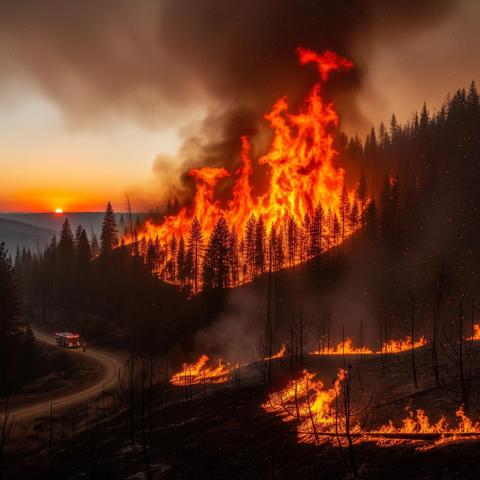
Atmospheric Chemistry Research to Understand Wildfires and Earth System Impacts:
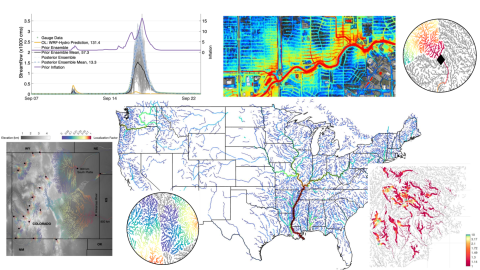
Data Assimilation and Observational Integration
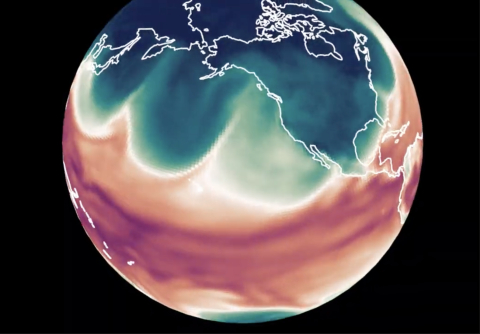
Weather-to-Subseasonal Predictability Research to Improve High-Impact Event Prediction
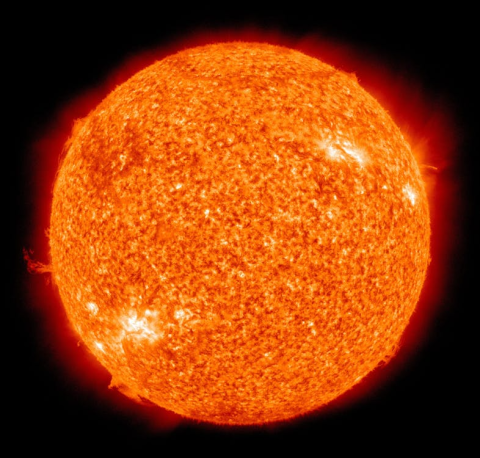
Geospace and Solar Research to Advance Space Weather Predictability
Urban-Scale Earth System Research to Inform Urban Risk and Resilience
Understanding Processes and Predictability
AI-Driven Field Campaigns and Data Collection
AI and machine learning create new possibilities for designing, conducting, and analyzing field campaigns. NSF NCAR is actively exploring how AI can strengthen observational strategies, improve data usability, and accelerate scientific insight. Emerging directions include:
- Applying AI to help design targeted field campaigns that address critical data and knowledge gaps relevant to modeling and data assimilation
- Automating quality assurance and quality control of raw sensor data in real time or near-real time
- Developing natural language–based tools to expand discovery and use of observational datasets across scientific domains
- Enabling AI-ready observational data to support advanced analytics and model development
- Advancing data merging and gap-filling approaches
Project Spotlights:
For more information or opportunities to get involved, please contact: ncarai@ucar.edu